 Image credit: SSRN
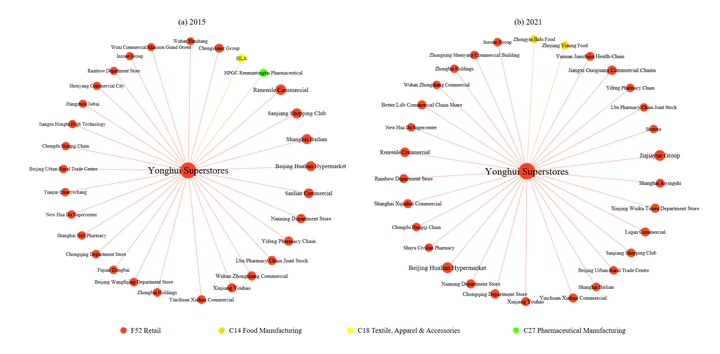
Abstract: We examine how Chinese firms compete for high-skilled talent using novel text-based product market competitor networks and job posting data. We document strong strategic complementarity: a one unit increase in rivals’ high-skilled postings raises a firm’s own postings by 0.6, generating a multiplier of 2.5. This competition is product-market driven, national in scope, and absent for low-skilled workers. Crucially, the strength of strategic complementarity increases with the downside risk of falling behind. A theoretical model shows complementarity arises when the fear of falling behind outweighs the gain from leading. Our results indicate that talent competition amplifies labor demand and is a central channel for product-market rivalry.
Keywords: strategic complementarity, DMP, peer effects, competition network

Weiwei Zheng
Assistant Research Fellow
My research interests include urban economics, labor economics, and spatial econometrics theory & application.